If you’ve saved up for your next Toronto investment property, a turnkey is usually the cheapest way in. You only need the down payment and closing costs. There’s no money needed for renos, and the rent starts on day 1.
But if you also have equity in your home, you have more options. Used the right way, it can mean a much bigger return on the same savings. Used the wrong way, it can leave you with a lot of debt and very little cash flow.
Here are 3 ways to end up with a similar 3-unit Toronto property, from a simple turnkey to the most aggressive, and how they compare with real numbers.
Level 1: The Turnkey Option
Say you have about $260,000 saved. That covers 20% down on a turnkey 3-unit Toronto property at $1.1 million, plus closing costs. This is a very good turnkey deal, not a typical one.
The 3 units rent for $2,650, $2,100 and $1,600 a month. After the mortgage and operating costs, it cash flows about $960 a month. Add about $14,300 of mortgage paydown in the first year, and that’s roughly a 10% return on your cash, before any appreciation.

It’s a solid, low-stress deal. You get stable cash flow now, and any long-term growth in value is a bonus on top. The catch is that all $260,000 of your savings goes in, and it stays in. To buy the next one, you have to save up all over again. If you want to see what Toronto units actually rent for, you can see what Toronto multiplexes really cost and earn.
Level 2: Use Your HELOC for the Reno, Then Refinance
Level 2 is where your home equity comes in. Instead of a turnkey, you buy a Toronto house that needs work for $850,000. Your savings cover 20% down and closing costs, about $200,000.
Then, instead of using more savings for the reno, you use a home equity line of credit (HELOC) on the house you live in. $150,000 turns it into 3 units. While the work is going on, you pay about $690 a month in HELOC interest at 5.5%, plus the mortgage on the purchase, and there’s no rent coming in yet. Build that into your budget.
After the work, the house is worth about $1.1 million and rents for the same as the turnkey. You refinance at 80% of the new value, and about $200,000 comes back to you.
| New mortgage (80% of $1.1M) | $880,000 |
| First mortgage (80% of $850K) | -$680,000 |
| Cash back out | $200,000 |
| Pay off the HELOC | -$150,000 |
| Back in your pocket | $50,000 |
For educational purposes only. Actual figures and returns may vary.

Now compare it to the turnkey. It’s the same $1.1 million value, the same $880,000 mortgage, the same rent and the same $960 a month of cash flow. The only difference is how much of your own money is still in it: about $260,000 with the turnkey, and about $148,000 here. So your return goes from about 10% to about 17%, still before market appreciation.
Your HELOC is back to zero and ready for the next property. The debt now sits on the rental as a regular mortgage, which usually comes with a lower rate than a HELOC. To test this with your own numbers, try our investment calculator.
Level 3: Keep the HELOC, or Pay Back Half
Some investors take it one step further. They do everything the same way, but when they refinance, they don’t pay the HELOC back. They keep the $200,000, and almost none of their own money is left in the deal.
But look at the debt. You owe $880,000 on the mortgage plus $150,000 on the HELOC. That’s over $1 million on a $1.1 million property, about 94% of what it’s worth. The HELOC interest is about $8,250 a year at 5.5%, which takes your cash flow from $960 a month down to about $275. One empty unit, a big repair or a rate jump, and you’re paying out of pocket.
You don’t have to go all the way. If you’d rather not be that stretched, you can pay back part of the HELOC. Say you pay back half, $75,000, and keep $125,000. Now about $73,000 of your own money is in the deal, cash flow comes back up to about $615 a month, and you owe about 87% of the value. Your return is about 30% before appreciation, with less stress.

| Level 1 | Level 2 | Level 3: keep it all | Level 3: pay back half | |
|---|---|---|---|---|
| Your money left in | $258,450 | $148,450 | about $0 | $73,450 |
| Cash flow | $960/mo | $960/mo | $273/mo | $617/mo |
| Loans vs value | 80% | 80% | 94% | 87% |
| Year 1 return | 10% | 17% | very high | 30% |
Return = cash flow plus year 1 mortgage paydown ($14,301), divided by your own cash left in, before market appreciation. 20% down, 4.50%, 30-year, operating costs 15% of rent, HELOC at 5.5% interest only. For educational purposes only. Actual figures and returns may vary.
The Risks of Using a HELOC to Invest
Level 3 only works if the property cash flows strongly, even after the extra interest, or if you have strong income to cover a bad month. If it does, the return on your own money is huge. If it doesn’t, it turns into bad debt tied to your home.
| Most HELOCs Are Variable The payment moves with rates, so a rate jump hits your cash flow right away. |
| The Appraisal Has to Come In If the house is valued lower than you hoped at the refinance, less cash comes back and more stays on your HELOC. |
| The Reno Stretch Costs Money You carry the HELOC interest and the new mortgage for months with no rent coming in. |
| Your Home Is on the Line Don’t borrow more than you can carry if the reno runs late or a unit sits empty. |
This is general education, not mortgage or tax advice. Talk to your own mortgage broker and accountant before you borrow against your home.
Keep a Clear Paper Trail for the Tax Write-Off
Put the HELOC money in its own account and send it straight to the investment property and the reno. When you borrow money to earn rental income, the interest can be a tax write-off.
If the money gets mixed into your everyday spending, that gets hard to prove. A clean trail keeps the interest deductible and makes tax time simpler.
Recycle the Same Money Into Your Next Property
This is how a lot of Toronto investors grow faster. Use the HELOC to do the work, refinance, pay it back, and the same room is ready for the next property. You recycle the same money again and again, as long as every property still cash flows on its own.
Our brokerage specializes in Toronto multiplexes. We’ll help you find deals, crunch the numbers, and guide you through renovations and management. If you want full support in Toronto multiplex investing, our team can help you:- Find high-potential properties
- Crunch the numbers so you know exactly where you stand
- Coach you through renovations to maximize returns
- Lock in great tenants
- Provide full property management so your investment runs smoothly
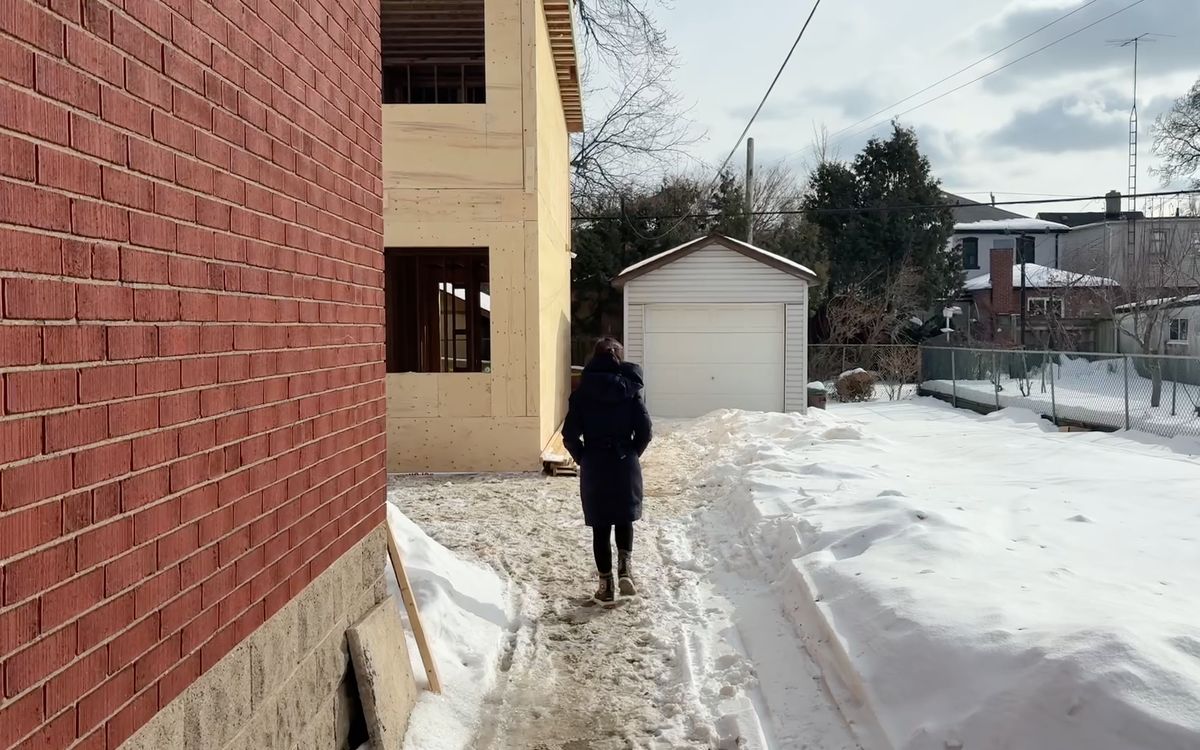
What do Toronto multiplexes really cost and earn?
We pulled the numbers from the 50+ deals we worked on in the past year: build costs, rents by unit type, and how the refinances came out. Free, and no best case.
