If you’re putting money to work next year, the number that matters most isn’t what an investment makes before tax. It’s what you keep after tax. And that’s where Toronto real estate has an edge most people don’t think about.
Real estate bought with borrowed money can give you a high return on the cash you put in, and it comes with tax advantages most investments don’t have. Some income can be pushed to when you sell. And when you do sell, the gain is taxed lower than interest from a GIC or savings account, and usually lower than dividends too. On the property below, about $96,000 a year in rent might only mean around $9,000 a year in tax, depending on how it’s set up.
The Toronto Triplex We’re Using as an Example
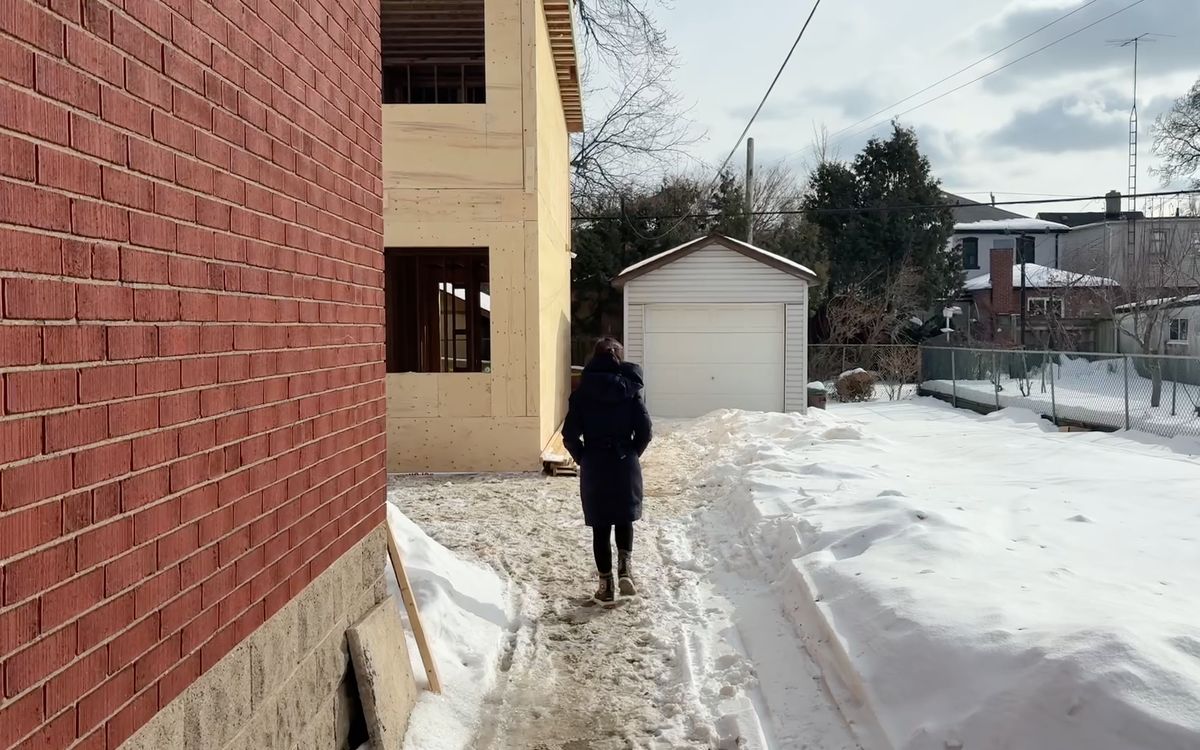
Our team recently bought a detached house near downtown Toronto for $900,000. We’re putting about $100,000 into turning it into 3 units. After the work, market comps tell us it should be worth around $1.2 million.
Here’s what the 3 units will rent for, top to bottom:
| Unit 1 (3 bed) | $3,900/mo |
| Unit 2 (1 bed) | $2,200/mo |
| Unit 3 (basement 1 bed) | $1,700/mo |
| Parking | $225/mo |
| Total rent | $96,300/yr |
20% down, 4.50%, 30-year amortization, refinance at 80% of the new value. For educational purposes only. Actual figures and returns may vary.
Want to see how numbers like these hold up on other properties? You can see what Toronto multiplexes really cost and earn.
Strategy 1: Refinance Instead of Selling
This is the strategy we see most. Instead of selling to get your cash back, you refinance. On this house, once the work is done, the plan is to refinance at 80% of the new value and pull about $240,000 back out.
| New mortgage (80% of $1.2M) | $960,000 |
| First mortgage (80% of $900K) | -$720,000 |
| Cash back out | $240,000 |
| Tax on that cash | $0 |
For educational purposes only. Actual figures and returns may vary.
We won’t pay any tax on that $240,000, because borrowed money isn’t income. And the interest on the bigger mortgage, about $42,000 in the first year, is a write-off against the rent. The principal part of the payment isn’t.
This is why most long-term Toronto investors rarely sell. They refinance, buy the next one, and let the properties keep growing. You can see what a bigger mortgage does to your payment with our mortgage calculator.
Strategy 2: Depreciation (CCA) Pushes the Tax to Later
The CRA calls depreciation capital cost allowance, or CCA. It lets you write off up to 4% of the building’s cost each year. Not the land, just the building.
Take the $96,000 of rent. After operating costs of about $14,000 and the mortgage interest, you’re left with about $40,000 of net income a year. At a typical 43% tax rate, you’d pay about $17,000 of tax on that. But say half of the $1 million cost is building. Depreciation on that is about $20,000 a year, so you’re only taxed on about $20,000, and the tax drops to about $9,000.
| Rent | $96,000 |
| Operating costs (15%) | -$14,000 |
| Mortgage interest | -$42,000 |
| Net rent | $40,000 |
| CCA (4% of $500K building) | -$20,000 |
| Taxed on | $20,000 |
| Tax without CCA (43%) | $17,000 |
| Tax with CCA (43%) | $9,000 |
Rounded. CCA shown from year 2 on; the first year is usually less. For educational purposes only. Actual figures and returns may vary.
The catch is that when you sell, you still owe the tax on what you claimed. It comes back as income in the year you sell, which can push you into a higher bracket. So you’re not skipping the tax, you’re paying it later.
Whether to claim CCA each year is a real decision, so it’s worth asking your accountant. You can run the rest of the numbers on any property with our investment calculator.
Strategies 3 to 5: Capital Gains, the Smith Manoeuvre and Living in One Unit
Strategy 3: Only Half of a Capital Gain Is Taxed
In Canada, only half of a capital gain is taxed. Say this house sells one day for $1.5 million. It cost about $1 million, so the gain is about $500,000. Only half of that, $250,000, gets added to your income. Compare that with a GIC. If you earned $500,000 in interest, you’d pay tax on all of it.
Strategy 4: The Smith Manoeuvre
If you own your home and have equity in it, you can borrow against it to buy a rental property. Because the money goes into an investment, the interest can be a tax deduction. Say you borrow $50,000 against your home at about 5%. That’s $2,500 a year in interest you can write off against your rental income. Learn more in our guide to the Smith Manoeuvre.
| Before the refinance | Own cash only | Borrow $50K |
|---|---|---|
| Your own cash in | $310,450 | $260,450 |
| Cash flow | $38,300 | $35,800 |
| Mortgage paydown | $11,700 | $11,700 |
| Year 1 return | 16% | 18% |
Cash needed: $180K down + $30,450 closing + $100K conversion, on a $720K mortgage at 4.50%, 30-year. Return is cash flow plus mortgage paydown on your own cash, before price growth. For educational purposes only. Actual figures and returns may vary.
Two things to watch. Keep a clear paper trail: put the borrowed money in its own account and send it straight to the purchase. And make sure the property still cash flows after the extra interest. If it doesn’t, you’re paying every month to carry it, and that’s bad debt.
Strategy 5: Live in One of the Units
If you don’t own a home yet, you can live in one unit of the multiplex you buy. The part you live in can be your principal residence, and that part of the gain can be tax-free when you sell. Say you live in one of the 3 units, about a third of the house. On a $500,000 gain, about a third, roughly $165,000, could be tax-free. You can’t write off costs for the part you live in, only the rented part.
The Deal Still Has to Work First
Tax breaks don’t fix a bad deal. Say you own a Toronto condo that loses money every month. Yes, that loss can lower the tax on your other income. But you’re still losing money every month, and saving on tax doesn’t turn a bad investment into a good one. If that’s you, it might be time to reposition: sell the condo and put that money into something that actually cash flows.
When the deal does work, this is why so many wealthy investors hold real estate. You make money from the rent and from the property growing in value, mostly with the bank’s money. And the tax rules let you keep more of it. Cash flow and value come first. The tax savings are the bonus.
If you’re buying next year, figure out 3 things now:
| How much cash you have Your down payment, closing costs and any renovation money. |
| How much you can borrow Check this with your mortgage broker. |
| Which tax strategies fit you Check this with your accountant. |
Your answers shape what you should buy: a turnkey that cash flows from day 1, a project you refinance, or a place where you live in one unit and rent out the rest. When you’re ready to look, our Deal of the Week shows real Toronto deals with the numbers.
Plan the Tax Side Before You Buy
For us, the most important part is recycling our money. We pull our cash back out without selling, put it into the next property, and keep growing. That’s how our clients build a second and third property, and the tax rules are a big reason it works.
Getting the setup right before you buy matters more than any deduction you claim later. A team that has done this many times can help you pick the right property, plan the refinance and avoid the mistakes that cost money.
Our brokerage specializes in Toronto multiplexes. We’ll help you find deals, crunch the numbers, and guide you through renovations and management. If you want full support in Toronto multiplex investing, our team can help you:- Find high-potential properties
- Crunch the numbers so you know exactly where you stand
- Coach you through renovations to maximize returns
- Lock in great tenants
- Provide full property management so your investment runs smoothly
What do Toronto multiplexes really cost and earn?
We pulled the numbers from the 50+ deals we worked on in the past year: build costs, rents by unit type, and how the refinances came out. Free, and no best case.
This is for educational purposes only; it does not guarantee future performance or serve as financial or tax advice.
