Canada’s 2026 federal budget just cut the down payment on a brand new triplex from 20% to 10%. It’s another push for the missing middle in Toronto real estate. That’s the housing between a single house and a big condo tower: duplexes, triplexes, fourplexes and small low-rise buildings.
Say you want to build or buy a new $1.5 million triplex in Toronto. Today, you’d need about $350,000 in cash once you add land transfer tax and legal fees. Under the new rule, it’s closer to $210,000. That’s about $140,000 less to get in.
So is this helpful? It opens up more options, but it’s still pretty niche. Below, we break down what the new rule allows, how much cash and income you’d really need, and why we think resale still wins for most Toronto investors.
What the New 10% Down Triplex Rule Allows
Right now, if you buy a Toronto triplex you won’t live in, CMHC will only insure up to 80% of the value. That’s why investors put 20% down. The budget creates a new insured mortgage for new 3 and 4 unit homes that goes up to 90%.
| Borrow Up to 90% Based on what the property will be worth once it’s built, not what you paid for the land. |
| No Need to Live There There’s no owner-occupancy rule, so investors can use it. |
| No Price Cap Unlike regular insured mortgages, there’s no maximum property value. |
| Up to 30 Years to Pay It Back A 30-year amortization keeps the monthly payment lower. |
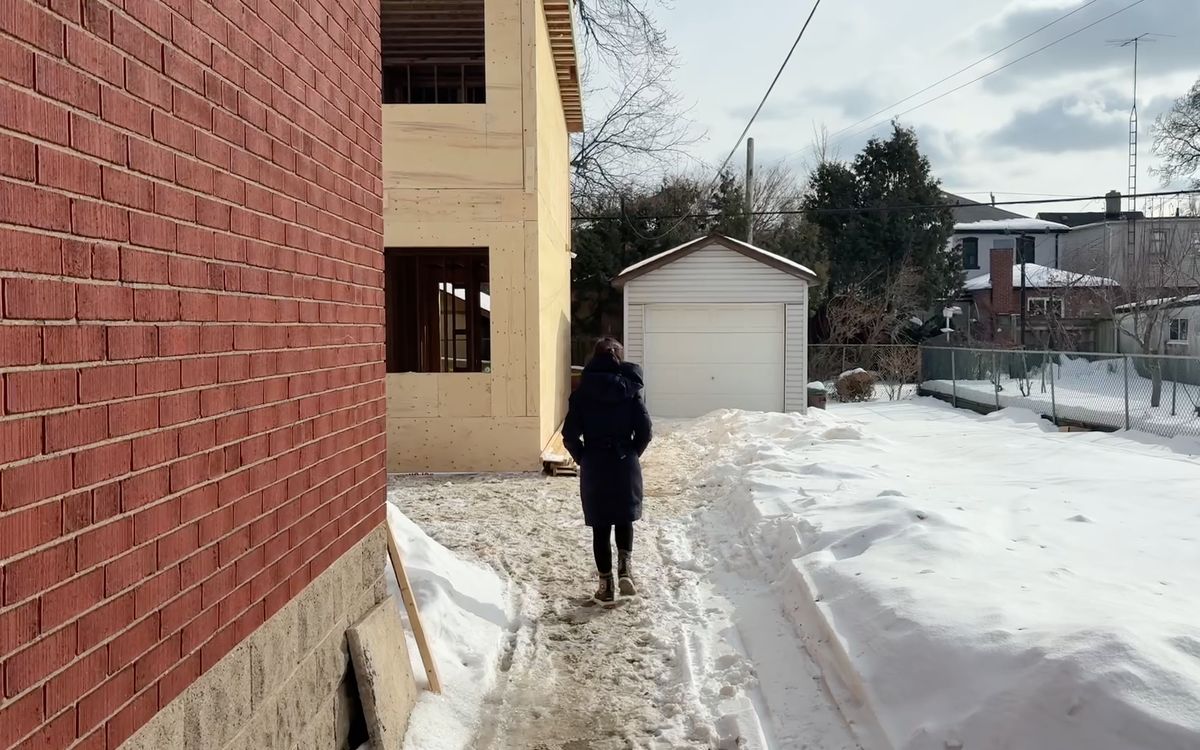
| New Builds Only You either build it, or buy it brand new from the builder. An older triplex down the street doesn’t count. |
| Starts February 1, 2027 It applies to mortgage insurance applications lenders send on or after that date. |
Keep in mind that new costs more than resale. So this isn’t a cheap way in. It could be a cheaper way to finance a build.
Based on Finance Canada’s Budget 2026 backgrounder. Insurers can still set their own rules, and details like premiums aren’t out yet.
Why Ottawa Picked Triplexes and Fourplexes
Buildings with 5 or more units cost millions, almost no one can afford them, and we haven’t seen many sold comps lately. That makes them hard to sell and hard to value. Opening this up to triplexes and fourplexes widens the buyer pool. More buyers means better liquidity. If you ever need to sell, someone’s on the other side.
The sites are easier to find too. A 5-plus unit build needs a bigger lot, and you’re checking things like backyard house potential. A triplex works on a lot more Toronto lots. So this rule doesn’t change what gets built. It lowers the barrier to entry on the kind of property that’s already working.
It’s also lower risk for lenders. With CMHC’s MLI Select for 5 units and up, you qualify mostly on the building’s rents. So more borrowers end up taking on big debt without the personal income to back it up. If rents fall, rates go up, or the project fails, there’s not much behind the borrower to keep paying the mortgage.
The Real Numbers on a $1.5M New Triplex
At 10% down, your down payment is $150,000. Add land transfer tax, legal fees and the tax on your insurance premium, and you need just over $200,000 in cash to close. You’d borrow $1.35 million, and the insurance premium gets added on top. Ottawa hasn’t set it yet, so we used about 3%, which brings the loan to roughly $1.39 million.
At about 4.44% for an insured 5-year fixed, that’s about $6,969 a month. Add around $1,500 a month for property tax, insurance and upkeep, and you break even at about $8,500 a month in gross rent. You can check your own payment with our mortgage calculator.
| 20% Down | 10% Down | |
|---|---|---|
| Down payment | $300,000 | $150,000 |
| Land transfer tax (Ontario + Toronto) | $52,950 | $52,950 |
| Legal fees | $1,500 | $1,500 |
| 8% PST on insurance premium | None | $3,348 |
| Total cash to close | $354,450 | $207,798 |
| Loan | $1,200,000 | $1,391,850 |
| Rate (5-year fixed) | 4.79% | 4.44% |
| Monthly mortgage payment | $6,255 | $6,969 |
| Cash flow at $8,500 rent | +$745 / mo | About $0 / mo |
| Household income to qualify | About $215,000 | About $245,000 |
For educational purposes only. Actual figures and returns may vary. 30-year amortization, $1,500 a month in operating costs, premium assumed at 3.1%, income assumes no other debt and counts half of gross rent.
The income line is the one most people miss. You still have to pass the stress test, which means qualifying at about 6.44%. Under CMHC’s current rules, that works out to around $245,000 in household income, and that already counts part of the rent. So for most investors, it’s income that caps this product, not cash.
Ready to Run Your Own Numbers?
Try the Investment CalculatorWhy Most Toronto Investors Won’t Use It
This rule gives you one more option, but it fits a pretty narrow group of people.
1 | You Need the Income, but Not the Cash That’s someone with a good salary and good credit who’d need another 2 years to save 20%, and who can’t pull it from a HELOC. Most Toronto investors we talk to with that kind of income also have equity somewhere. A HELOC is faster, and there’s no mortgage insurance. |
2 | It Has to Be New Construction That rules out most of what our clients actually buy: a resale house to add value to, a conversion into a triplex, or a turnkey house already on the market. Those usually need less cash, and there’s no HST on a resale property. |
3 | Building One Is a Big Job You’re building a brand new house. That takes real experience, a good builder and a lot of time. And HST can kick in on the value of the finished building, which cuts into your returns. |
So fewer people fit this box, and fewer will want to take it on even if they do.
The Resale Deals That Still Win
Compare the new 10% down option to the resale deals we’re finding for clients in Toronto right now. Our best turnkey 3-unit house takes about $250,000 in cash with 20% down and cash flows close to $3,000 a month. Less debt, less income to qualify, and no mortgage insurance.
Our best resale conversion project takes about $300,000 in cash. You’d pull about $240,000 back out on the refinance, leaving around $60,000 in the deal. It still cash flows over $1,500 a month after the refi, and it has laneway suite potential. If you want to see what Toronto multiplexes really cost and earn, our guide breaks it down.
| New Triplex, 10% Down | Turnkey Resale | Resale Conversion | |
|---|---|---|---|
| Cash in | $208,000 | $250,000 | $300,000 |
| Cash back on refi | None | None | $240,000 |
| Cash left in deal | $208,000 | $250,000 | $60,000 |
| Debt | $1.39M | $640K | $1.2M |
| Cash flow | About $0 / mo | About $3,000 / mo | $1,500+ / mo |
For educational purposes only. Actual figures and returns may vary. Turnkey and conversion figures are from our best current client deals.
For most Toronto investors, resale still wins. A turnkey takes similar cash with less debt, cash flows better, and there’s no HST. A resale project leaves less of your cash in the deal after the refi, and you make your money on the added value. You can browse more of these on our Deal of the Week page.
Is 10% Down Right for You?
The new 10% down rule makes the most sense if you have strong income, no HELOC room, and you really want a brand new building. For everyone else, a resale turnkey or conversion usually takes similar cash, carries less debt and cash flows better.
The right choice depends on your income, your equity and how hands-on you want to be. That’s where an experienced team helps, so you pick the option that fits you, not just the one in the headlines.
Our brokerage specializes in Toronto multiplexes. We’ll help you find deals, crunch the numbers, and guide you through renovations and management. If you want full support in Toronto multiplex investing, our team can help you:- Find high-potential properties
- Crunch the numbers so you know exactly where you stand
- Coach you through renovations to maximize returns
- Lock in great tenants
- Provide full property management so your investment runs smoothly
What do Toronto multiplexes really cost and earn?
We pulled the numbers from the 50+ deals we worked on in the past year: build costs, rents by unit type, and how the refinances came out. Free, and no best case.
This is for educational purposes only; it does not guarantee future performance or serve as financial or tax advice.
