Current overnight rate: 2.25% | Prime rate: 4.45% | Last updated: September 2, 2026
On September 2, 2026, the Bank of Canada held its overnight rate at 2.25% for the seventh consecutive meeting.
Prime rate stays at 4.45%. If you have a variable rate mortgage or a HELOC, your payment does not change this month.
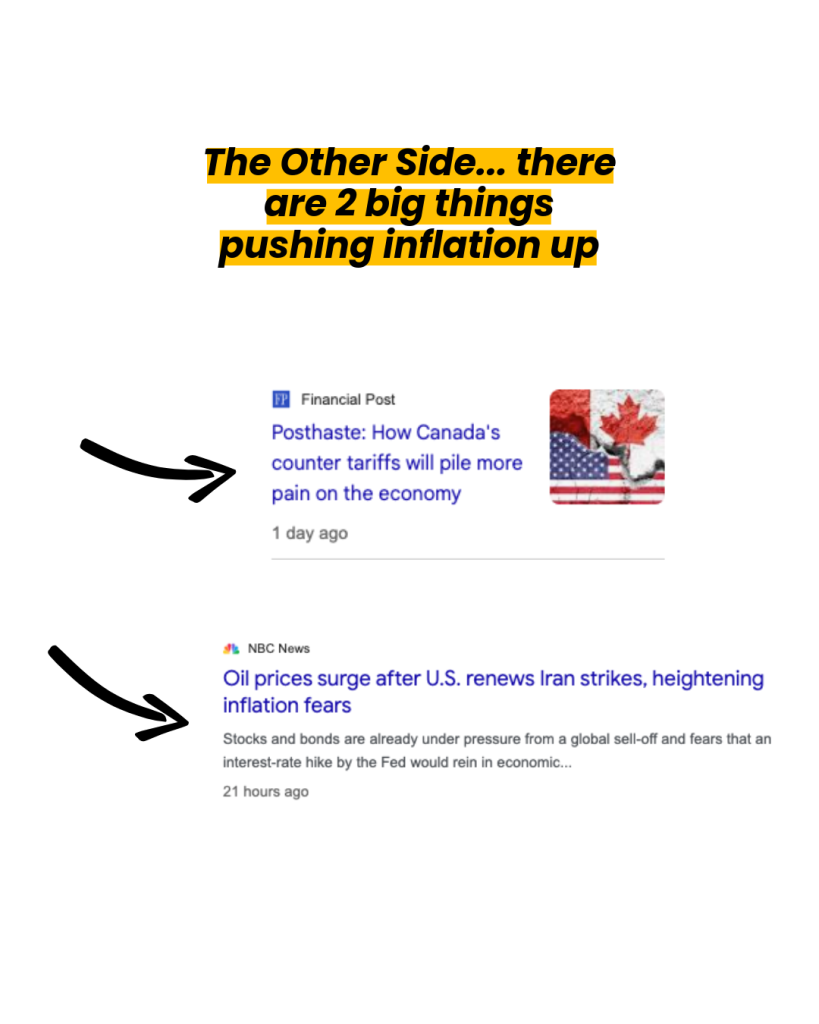
The Bank left rates unchanged because inflation and growth are tracking close to what it expected back in July. But it flagged that the risk to inflation has shifted higher, mostly because of high oil prices tied to the conflict in the Middle East and new tariffs between Canada and the US.
If oil prices and tariffs keep pushing costs up, the next move could be a hike rather than a cut. If the recovery loses steam instead, especially with trade uncertainty still unresolved, the Bank could hold longer or lean back toward cuts. Right now, it says it is ready to move either way depending on the data.
The Bank is watching two things closely: whether higher gas prices spread into the cost of other goods and services, and whether new tariffs and counter-tariffs start showing up in what Canadians pay at the register.
📌 Next decision: October 28, 2026.
What This Means for Your Mortgage
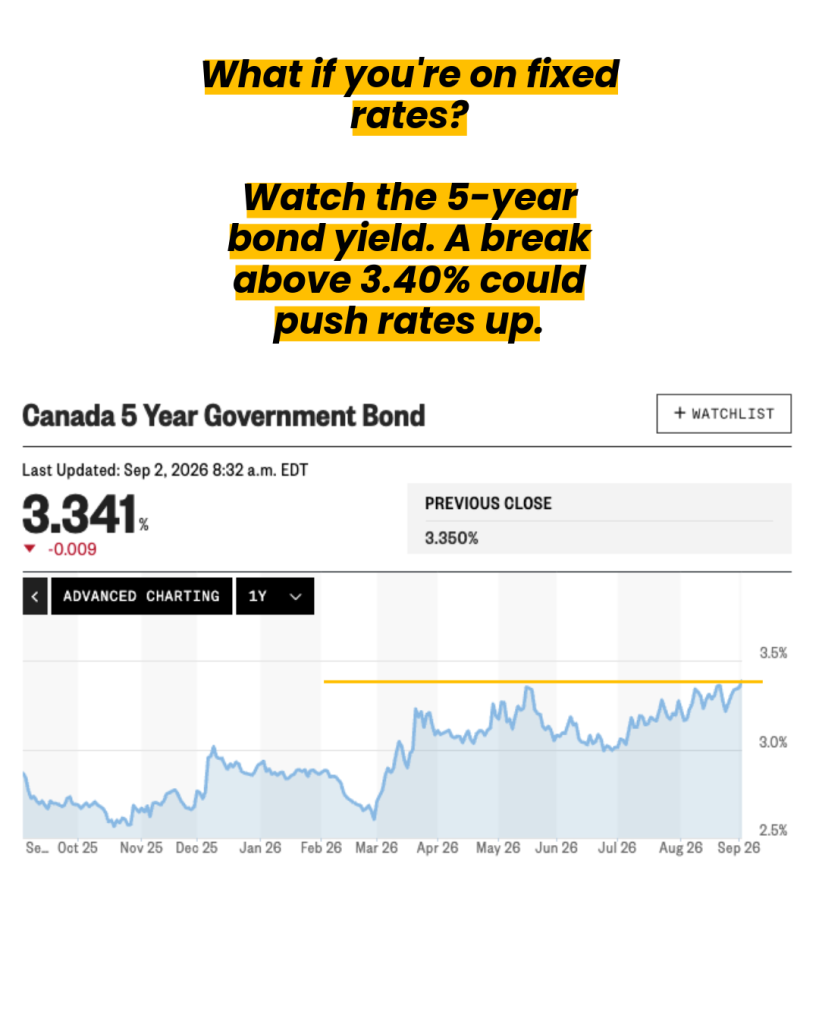
Right now the best 5-year fixed rates sit around 3.9% to 4.1%, depending on your down payment and lender. Fixed rates are priced off the bond market, not the Bank of Canada, and the 5-year Government of Canada bond yield has climbed to about 3.35%, its highest level in over a year. If that yield keeps climbing, expect fixed rates to inch up too.
The best 5-year variable rates are around 3.3%, tied to today’s 4.45% prime rate. Your rate does not change with today’s hold. Whether it moves next depends on what the Bank does at its next two meetings this year, and the banks are split on which way that goes.
If you want certainty for the next few years, a fixed rate locks in today’s cost and protects you if rates climb. If you can handle some movement and think rates might ease later, variable still gives you more flexibility to break or refinance. Either way, a free rate hold protects you while you decide.
What the BoC is Actually Seeing Right Now
Inflation: CPI inflation has been holding near 3%, mostly because of higher gas prices tied to the conflict in the Middle East. Strip out gas, and inflation is closer to 2.2%. Core inflation, the measure the Bank watches most closely, is still close to 2%. But there is a real worry that if oil prices stay high, or new tariffs raise costs further, that pressure spreads to other goods and services.
Growth: Canada’s economy grew 3.3% in the second quarter, bouncing back after a weak start to the year. Consumer spending, exports and business investment all picked up. But growth over the past 12 months is a more modest 1.1%, and new US tariffs on autos, steel and other goods are adding uncertainty to the months ahead.
Policy stance: The Bank held rates because inflation and growth are tracking close to its July forecast. It is watching two things closely: whether high oil prices and tariffs push inflation higher, which could call for a hike, and whether trade uncertainty knocks growth off track, which could call for a cut. Right now it is not ready to move in either direction.
This is not a one way bet. It is a Bank caught between an inflation risk and a growth risk at the same time.
Where Are Interest Rates Going in Canada?
Do not expect a rate boom.
Do not expect aggressive cuts either.
The most likely path is another stretch of holds, with the next move depending on which risk wins out first, inflation or growth.
If oil prices and tariffs keep pushing costs up, a hike becomes more likely into 2027. If trade tensions drag on growth instead, cuts come back on the table. See our cap rates explainer for how rate moves flow through to what you actually earn on a property.
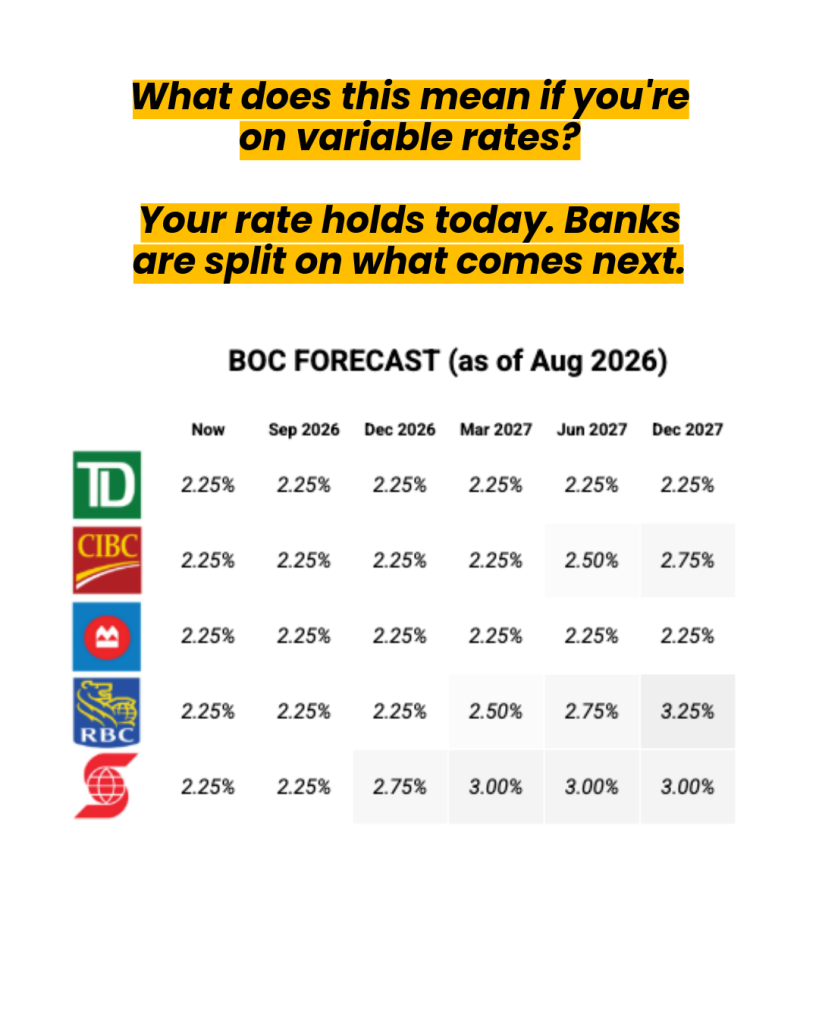
| Bank | July 2026 | Sep 2026 | Dec 2026 | Dec 2027 |
|---|---|---|---|---|
 | 2.25% | 2.25% | 2.25% | 2.25% |
 | 2.25% | 2.25% | 2.25% | 2.75% |
 | 2.25% | 2.25% | 2.25% | 2.25% |
 | 2.25% | 2.25% | 2.25% | 3.25% |
 | 2.25% | 2.25% | 2.75% | 3.00% |
Last Updated: September 2, 2026.
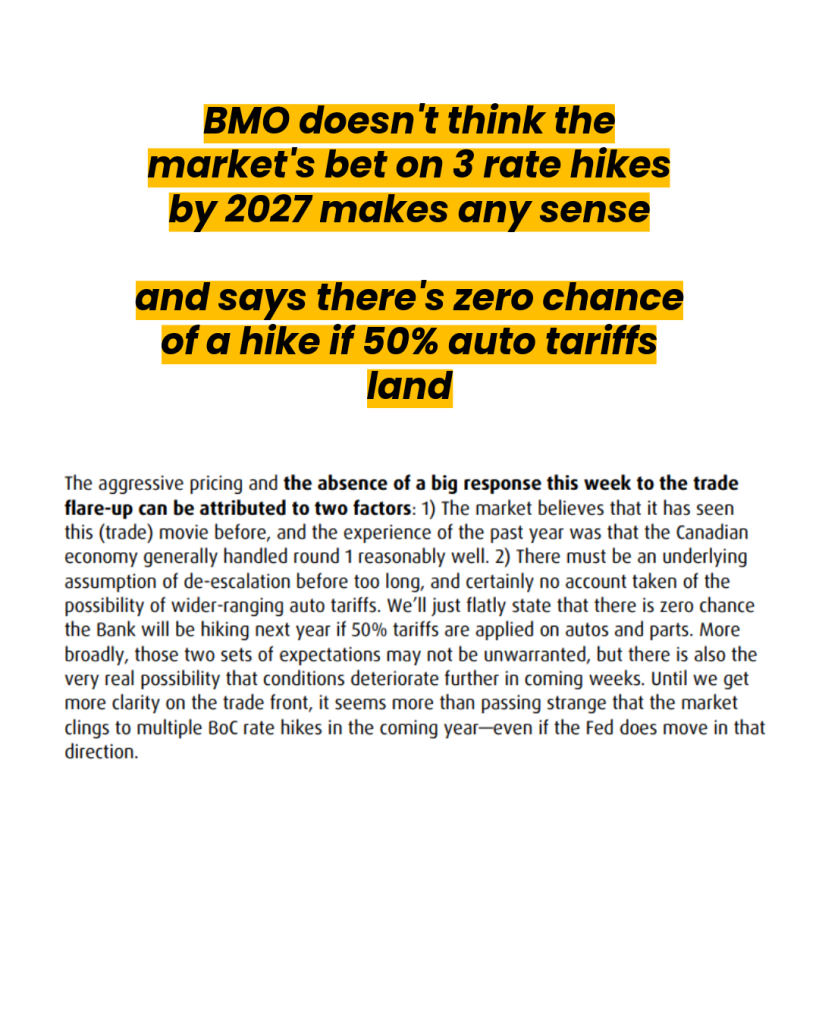
TD, BMO, CIBC and RBC all expect the rate to hold at 2.25% through the end of this year, with any hikes pushed into 2027. Scotiabank is the clear outlier on timing, calling for a hike to 2.50% at the October meeting and 2.75% by December. Bond markets are not convinced either way, they priced only a 3% chance of a move at today’s announcement.
Looking further out, the split widens. TD and BMO see the rate holding at 2.25% right through 2027. CIBC expects it to reach 2.75% and RBC as high as 3.25% by the end of 2027, once the current trade uncertainty works its way through the economy.
BOC Meeting Schedule & Historical Rates
| Announcement Date | Target Rate | Change |
|---|---|---|
| 2024 | ||
| January 24, 2024 | 5.00% | — |
| March 6, 2024 | 5.00% | — |
| April 10, 2024 | 5.00% | — |
| June 5, 2024 | 4.75% | -0.25% |
| July 24, 2024 | 4.50% | -0.25% |
| September 4, 2024 | 4.25% | -0.25% |
| October 23, 2024 | 3.75% | -0.50% |
| December 11, 2024 | 3.25% | -0.50% |
| 2025 | ||
| January 29, 2025 | 3.00% | -0.25% |
| March 12, 2025 | 2.75% | -0.25% |
| April 16, 2025 | 2.75% | — |
| June 4, 2025 | 2.75% | — |
| July 30, 2025 | 2.75% | — |
| September 17, 2025 | 2.50% | -0.25% |
| October 29, 2025 | 2.25% | -0.25% |
| December 10, 2025 | 2.25% | — |
| 2026 | ||
| January 28, 2026 | 2.25% | — |
| March 18, 2026 | 2.25% | — |
| April 29, 2026 | 2.25% | — |
| June 10, 2026 | 2.25% | — |
| July 15, 2026 | 2.25% | — |
| September 2, 2026 | 2.25% | — |
| October 28, 2026 | TBC | TBC |
| December 9, 2026 | TBC | TBC |
Mortgage Rate Estimates (September 2026)
If you’re planning to buy or refinance, here’s a quick cheat sheet:
| Product | Estimate |
|---|---|
| 3-Year Fixed Rate | 3-Year Bond yield + 1% |
| Prime Rate | Bank of Canada rate + 2.2% = 4.45% |
| Variable Mortgage Rate | Prime – 0.85% |
| HELOC Rate | Prime + 0% to 2% |
Fixed rates move with the bond market days or weeks ahead of any Bank of Canada decision, since lenders are pricing in where they expect rates to be years from now, not just today. Variable rates move only when the Bank actually changes its rate, so they are slower to shift but track the Bank’s decisions directly.
In a rising rate environment, fixed rates typically move first as bond yields react to expectations. In a falling environment, variable rates often move first once the Bank starts cutting, while fixed rates lag until the bond market is convinced the cuts will stick.
Example — September 2026:
3-year bond yield: 3.1% → Fixed mortgage rates: ~4.1%
Prime rate: 4.45% → Variable mortgage rates: ~3.6%
Value-Add Opportunities: Better Returns, Lower Risk
Value-add opportunities are more attractive today for two key reasons.
First, prices are more stable after adjusting downward from their peaks. Large price swings increase the chance that gains from a value-add project can be wiped out, so lower volatility reduces this risk.
Second, the gap between project properties and finished values has widened compared to the peak, creating stronger and more reliable upside for investors.
With construction costs more predictable, returns now depend more on execution and income growth than on market timing. For houses and multiplexes, garden suite and laneway suite projects lead to better value-add returns with lower and more predictable risk.
Value-Add Opportunities: Better Returns, Lower Risk
Value-add opportunities are more attractive today for two key reasons.
First, prices are more stable after adjusting downward from their peaks. Large price swings increase the chance that gains from a value-add project can be wiped out, so lower volatility reduces this risk.
Second, the gap between project properties and finished values has widened compared to the peak, creating stronger and more reliable upside for investors.
With construction costs more predictable, returns now depend more on execution and income growth than on market timing. For houses and multiplexes, this leads to better value-add returns with lower and more predictable risk.
What Should Real Estate Investors Focus On Right Now?
This isn’t the time to bet on price appreciation. Instead, smart investors are focused on:
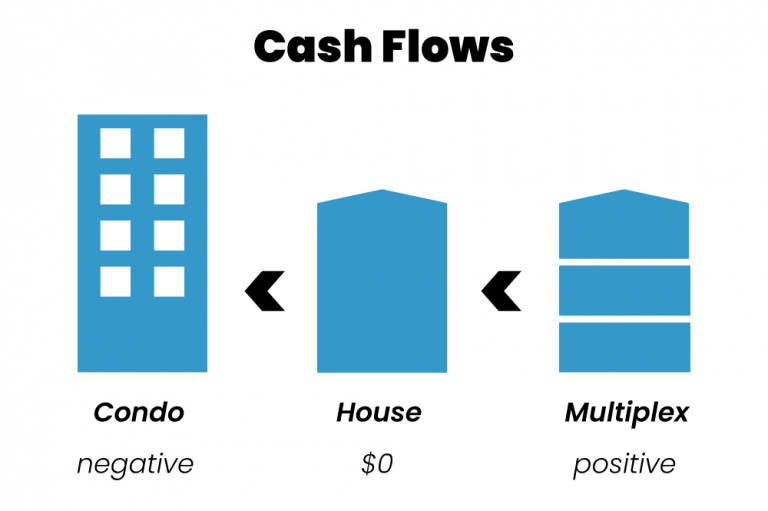
- Strong cash flow from day one
- Legal multi-units in stable, working-class areas
- Properties with laneway/garden suite potential
- Smart use of leverage while rates are easing
- Flexibility to refinance or exit
Canada’s 2026 Interest Rate Outlook and What It Means for Real Estate Investors
Today’s hold keeps the ground steady, but most banks now see the next move as up, not down. That shifts the calculus slightly for leveraged investors, the window to lock in a lower cost of capital may be narrower than it looked a few months ago.
For Toronto multiplex investors, this argues for locking in financing where it makes sense and underwriting deals on today’s cash flow, not on the hope of another round of cuts. Try our total return calculator to model this out for your own numbers.
Want to see what’s possible for you? Book a strategy session with us here.

What Toronto Real Estate Investment Is Right For You?
Check out our complete Toronto real estate investment guide for all the details and real-life examples. If you’re ready to dive in, just book a call with us!
