Why Toronto Investors Are Being Pitched Edmonton Right Now
Out-of-market pitches follow a pattern. Hamilton, Florida, Detroit, Saskatchewan — the story always has the same shape. Better numbers, lower entry costs, and a narrative about the next big market. Edmonton is the current version of that story. The pitch works because Toronto investors are used to thin margins and high barriers to entry. When something looks dramatically easier, it gets attention.
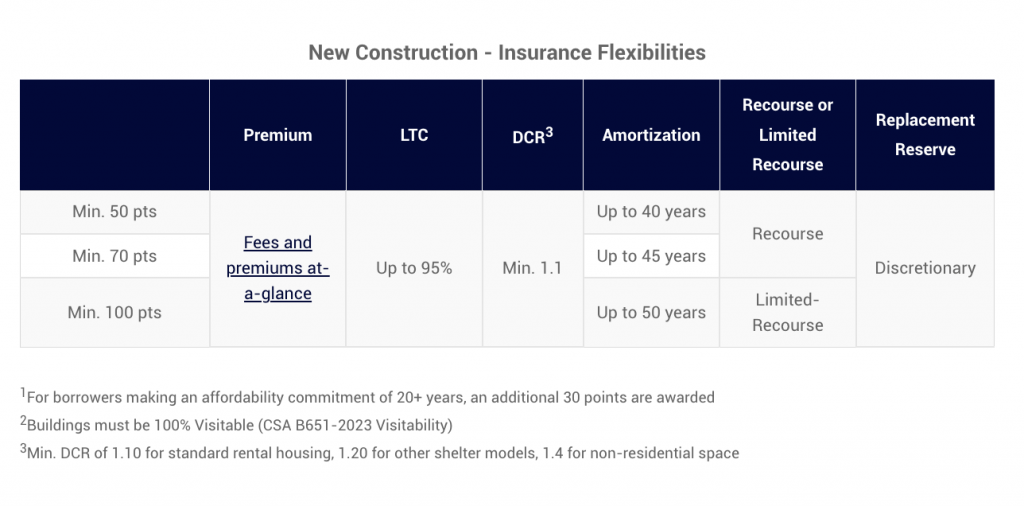
The CMHC MLI Select program is real. It offers high-ratio financing, long amortization, and lower insurance premiums for purpose-built rental properties that meet affordability and energy criteria. That is a legitimate and valuable program. But a strong mortgage structure on a weak market bet is still a weak investment. The financing does not change the fundamentals of what you are buying or where you are buying it.
The deeper issue is that when you invest out of market, you are flying blind. You are trusting rent projections you cannot independently verify, relying on management you have never met, and taking on a market you do not actually know. Every time this pitch cycle has played out in other cities, investors ended up owning something they could not easily manage, sell, or refinance. Edmonton is just the city with the current momentum behind the pitch.
The CMHC Valuation Gap and What It Means for Your Equity
Here is the first major risk in this deal, and it is one that gets glossed over in most pitches. CMHC values a property by looking at projected rents and working backwards to a purchase price. The problem is that CMHC valuations often come in higher than what a real investor would actually pay on the open market. In Toronto, we see this regularly. CMHC might value a five-unit multiplex at $3.5 million while real buyers transacting in the market are closer to $2.7 to $3 million. And even that range is hard to pin down because there are no solid sold comparables for large new builds.
CMHC is comfortable with valuations running a little warm because their goal is to encourage more rental housing construction. Their structure protects them even if a loan ends up higher than true market value, because as long as the property cash flows, borrowers are unlikely to walk away. But that protection belongs to CMHC, not to you. For you as the investor, the outcome is straightforward: you could close on a building where your mortgage is higher than the property is actually worth, with no practical way to exit without taking a serious loss.
This is not a theoretical risk. It is built into the structure of how CMHC prices these deals. And it matters most in a market like Edmonton where there are no land constraints, strong investor appetite, and a long construction pipeline — all of which put pressure on rents and resale values at exactly the time you would need them to hold up.
Edmonton’s Rental Supply Problem and the 2027 Closing Risk
The second major risk compounds the first. You are locking in a $2.3 million purchase price based on what rents look like today. But this deal does not close until 2027. A lot can change in two to three years, and in Edmonton’s rental market, the data already points in one direction. According to CMHC’s Housing Supply Report, Edmonton’s rental construction pipeline is running approximately 50% above its 10-year average. That is not a minor uptick. That is a signal that a significant amount of new supply is headed into the market.
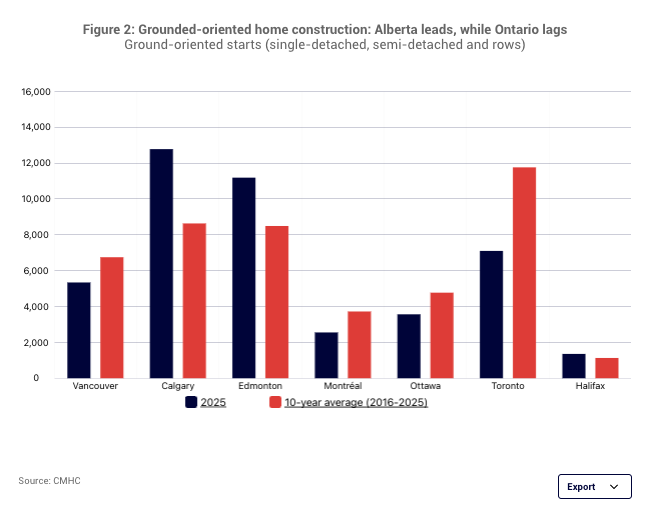
Edmonton has no meaningful land constraints. Unlike Toronto, where geography, zoning history, and high land costs slow supply response, Edmonton developers can and do build when the numbers pencil out. That structural reality means rental markets there are more exposed to supply cycles. When the pipeline runs hot, rents soften. And when rents soften, the income-based valuation that justified your $2.3 million purchase price also softens.
Run the numbers on the scenario you could be walking into. You paid $2.3 million. You close in 2027 with roughly $2.2 million in debt. But softer rents and a conservative CMHC valuation put the property’s market value closer to $1.8 million. That is roughly $400,000 to $500,000 underwater on day one. You cannot sell without absorbing that loss. You cannot refinance to recycle capital because the equity is not there. And growing your portfolio from that position becomes extremely difficult. The cash flow might still be positive on paper, but your capital is locked with no clear path out.
What Conservative Multiplex Investing Actually Requires
The appeal of the Edmonton deal is real. Low entry, high leverage, government-backed financing, and a clean cap rate number. But good investing is not just about the entry point. It is about what happens at closing, what your equity position looks like, whether your valuation holds, and whether you can actually move your capital when the next opportunity comes up. The Edmonton pitch scores well on entry and looks good on a pitch deck. It scores poorly on all of the other things.
Conservative investing means staying careful about valuations. It means keeping your leverage at a level you can actually refinance out of. It means investing in a market you understand, where sold comparables exist and where your assumptions about rents and values can be tested against reality. It also means thinking about what Toronto’s current multiplex rules make possible, including the ability to add density to a single lot and grow income without buying a second property.
Edmonton is not a bad city. Some investors will do well there. But for a Toronto investor being handed a pre-construction pitch with a 2027 closing date, the risk profile is much harder than the numbers suggest on the surface. The smarter approach right now is to stay in a market you know, work with verifiable comparables, and build a deal structure where your capital can actually move. In Toronto, with the right property and the right project, those conditions exist today.
Work With a Team That Knows Toronto Multiplexes
The gap between a deal that looks good on a spreadsheet and one that actually performs comes down to valuation accuracy, market knowledge, and a capital structure you can exit. That is exactly what makes Toronto multiplex investing worth understanding properly before committing to something out of market with a multi-year closing timeline.
Whether you are comparing pre-construction options, evaluating a turnkey purchase, or exploring what a renovation and garden suite addition could do for your returns, the details matter and they compound. Working with people who invest in this market themselves makes a significant difference in the outcome.
Our brokerage specializes in Toronto multiplexes. We’ll help you find deals, crunch the numbers, and guide you through renovations and management. If you want full support in Toronto multiplex investing, our team can help you:- Find high-potential properties
- Crunch the numbers so you know exactly where you stand
- Coach you through renovations to maximize returns
- Lock in great tenants
- Provide full property management so your investment runs smoothly

What Toronto Real Estate Investment Is Right For You?
Check out our complete Toronto real estate investment guide for all the details and real-life examples. If you’re ready to dive in, just book a call with us!
This is for educational purposes only; it does not guarantee future performance or serve as financial or tax advice.
