If you have been looking at multiplexes in Hamilton or Calgary and wondering whether it is worth stretching into Toronto instead, the answer depends almost entirely on one thing: whether you have a cash problem or an income problem. Most investors assume they cannot afford Toronto before they ever run the actual numbers. That assumption is often wrong.
A multiplex in Hamilton is running around $800,000 to $900,000 right now. A Toronto multiplex is $1.1 to $1.2 million. That is roughly a $300,000 difference, and possibly a smaller gap than you expected. What that gap actually means for you depends on your specific situation, and in many cases the math ends up closer than it looks.
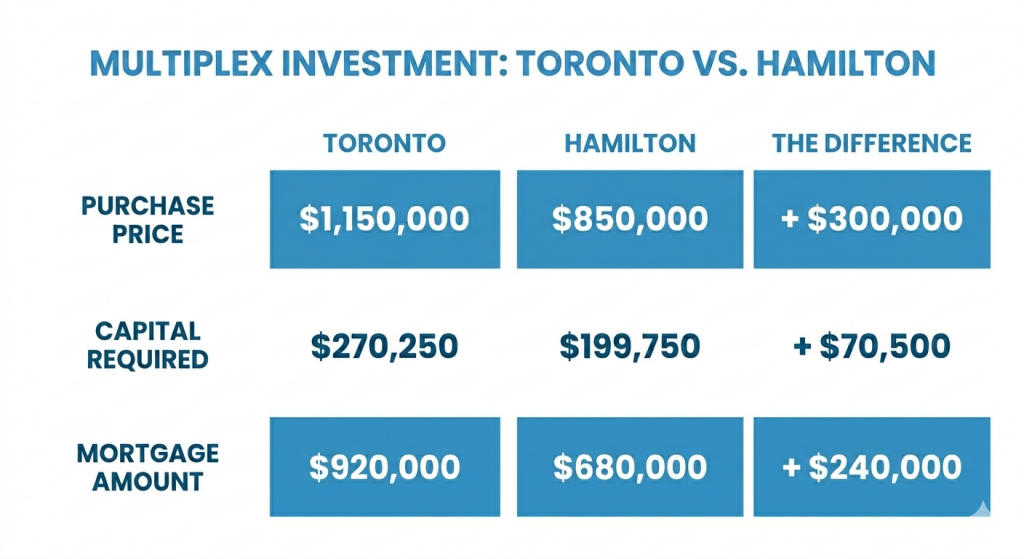
Cash Problem vs Income Problem: Two Very Different Situations
The first situation is a cash problem. You have enough income to qualify for a Toronto mortgage but you do not have enough saved for the larger down payment. On a $300,000 price difference, 20% down plus closing costs works out to roughly $70,000 more in cash. If you can sell something smaller in your portfolio to free that up, stretching into Toronto is worth it. You are getting a significantly stronger asset for $70,000 more out of pocket.
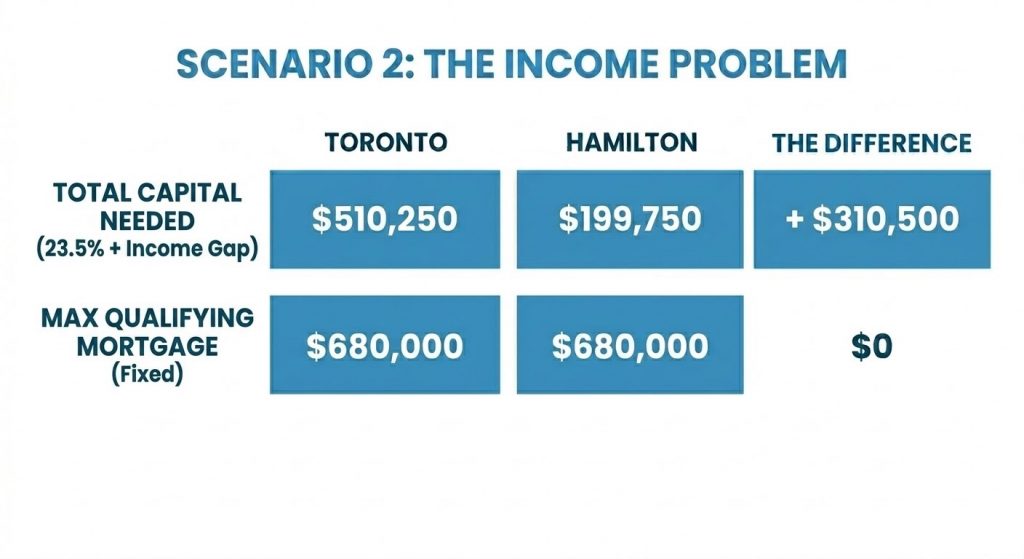
The second situation is an income problem. Your income does not support the larger Toronto mortgage and you would need to put in an extra $300,000 in cash to make up for it. In that case, higher leverage in a secondary market might make more sense because you are putting less of your own money to work for the same mortgage size.
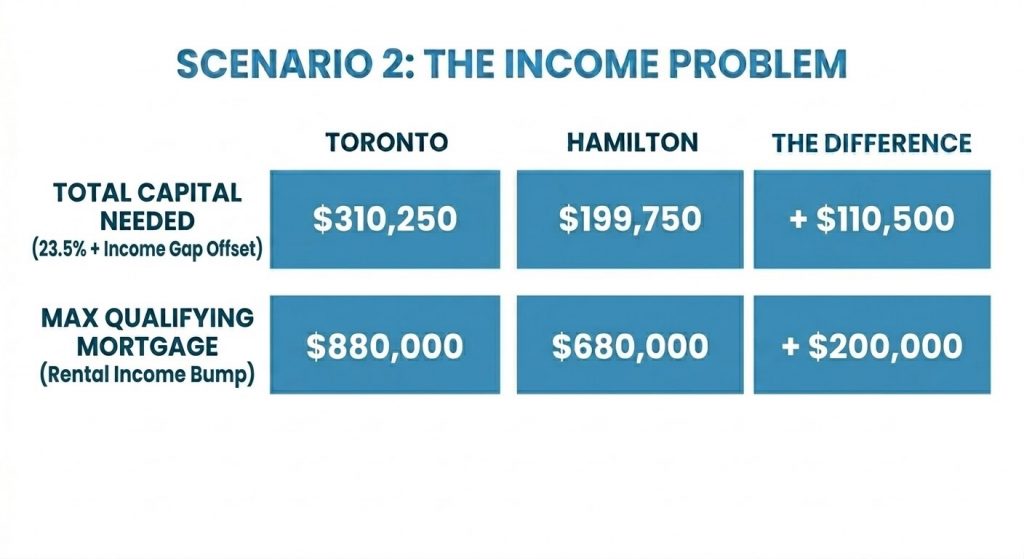
But before you assume you are in the second situation, run the Toronto numbers first. A Toronto triplex rents for more than secondary markets, and that extra rental income counts toward your mortgage qualification. Once you factor in the higher rents, the income gap might shrink from $300,000 down to something closer to $100,000. Do not rule Toronto out before you actually run the numbers with full rental income included. Use our total return projections calculator to stress-test both scenarios side by side.
What the $300K Premium Actually Gets You
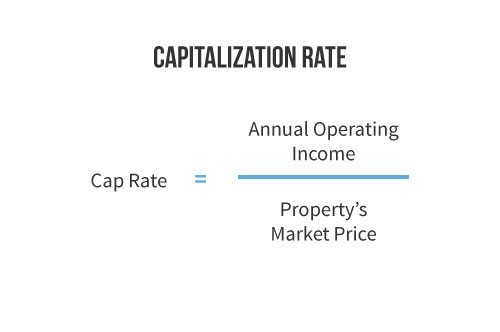
Toronto cap rates for smaller multiplexes are often listed around 4.5% and investors use that number to write the city off. But for smaller multiplex houses the real numbers are better than that. A three-unit turnkey house in Toronto right now is closer to a 5.5% cap rate. That is a meaningful difference from the headline number most people see.
Here is a real example. You buy a triplex for $1.2 million. Three units renting for $2,500, $2,300, and $1,700 a month. That is $6,500 a month in rent and close to $1,000 a month in positive cash flow. That is right around a 5.5% cap rate on the main house alone. Now add a garden suite in the backyard. You can build one for around $350,000 and rent it for around $3,200 a month. That backyard suite alone is close to a 10% return on what you put in.
Average that out with the main house and you are looking at around 7% overall with over $4,000 a month in positive cash flow on a fully optimized lot. That is comparable to what you get in secondary markets, and in many cases better. Toronto now allows up to six units plus a backyard suite on a single residential lot. You can build up, build out, and add income in ways that most secondary markets simply do not allow.
Why Toronto Rental Demand Is More Stable Than Hamilton or Calgary
Hamilton is heavily dependent on manufacturing and university activity. Calgary is tied to oil. When either of those sectors slows down, landlords feel it directly through higher vacancy, softer rents, and less reliable tenants. That sector concentration creates risk that does not always show up in the headline cap rate numbers.
Toronto runs on finance, technology, healthcare, education, and government all at the same time. That mix keeps rental demand consistent across economic cycles. When one sector slows, the others tend to hold. That diversification is built into the city’s economy and it shows up in rental performance over time.
For investors focused on long-term income rather than short-term yield, that stability is worth paying for. A property that cash flows slightly less in a strong market but holds its rents through a downturn is often the better long-term hold. That is what Toronto’s economic mix gives you.
How to Handle Older Houses and Repair Costs in Toronto
One of the most common concerns about Toronto multiplexes is the age of the housing stock and the repair bills that come with it. It is a fair concern but it is manageable when you know what to look for. The real risks are the big-ticket items: the roof, the furnace, the air conditioning, and the plumbing. These all last roughly 15 to 20 years.
If you are buying a property where these items have already been replaced, you are unlikely to face those costs again for a long time. That is something you can verify during inspection and factor directly into your purchase decision. A house with a new roof, newer mechanicals, and updated plumbing is a very different risk profile from one that has not been touched in 30 years.
The right approach is to build a monthly line item for repairs and capital expenditures into your cash flow projections from day one. If the property still cash flows strongly after that reserve is included, the numbers work. If it does not, that is useful information before you buy. For a full breakdown of how to run those projections on any Toronto multiplex, our team can walk you through it deal by deal.
Start Building Your Toronto Multiplex Portfolio
The gap between Toronto and secondary markets is smaller than most investors think, and in many cases the Toronto numbers are stronger once you account for higher rents, more flexible zoning, and more stable long-term demand. The key is running the actual numbers before you decide. Most investors who rule out Toronto have never done that comparison properly.
If your cash gap is manageable, Toronto is the stronger long-term hold. If the gap feels too large, do not assume secondary markets are the answer until you have run the Toronto numbers with full rental income included. That one step changes the picture for a lot of investors.
Our brokerage specializes in Toronto multiplexes. We’ll help you find deals, crunch the numbers, and guide you through renovations and management. If you want full support in Toronto multiplex investing, our team can help you:- Find high-potential properties
- Crunch the numbers so you know exactly where you stand
- Coach you through renovations to maximize returns
- Lock in great tenants
- Provide full property management so your investment runs smoothly

What Toronto Real Estate Investment Is Right For You?
Check out our complete Toronto real estate investment guide for all the details and real-life examples. If you’re ready to dive in, just book a call with us!
This is for educational purposes only; it does not guarantee future performance or serve as financial or tax advice.
