Fixed mortgage rates in Toronto are climbing back toward 4.5%. If you lived through 2022, that number alone probably makes you nervous. Rates went from under 2% to 6% back then, and Toronto real estate prices fell 25%.
So here is the real question. Does this new rate move mean prices have more room to fall? We looked at what actually happened the last time rates spiked, what happened after they came back down, and what the data says about where the pressure goes next. The short answer might surprise you.
Why Rates Are Rising Again
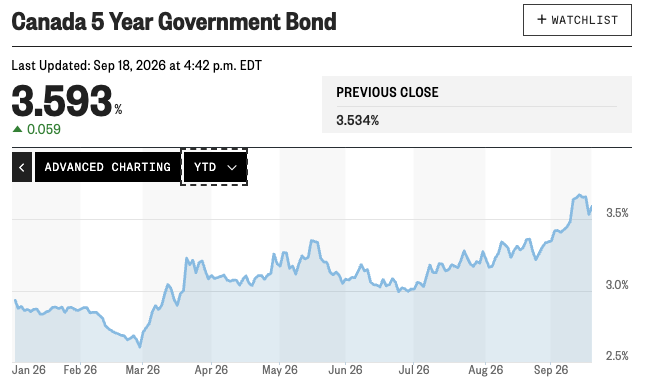
The Bank of Canada held its rate steady on September 2, 2026. That is the 7th hold in a row. The rate has been sitting at 2.25% for most of this year, and the next decision is not until the end of October.
But two weeks later, the US Federal Reserve raised its own rate for the first time since 2023. Their economy is growing fine. The problem is inflation is running hotter than they want, and that combination is exactly what pushes a central bank to hike instead of hold.
Here is why that matters for your Toronto mortgage. Fixed mortgage rates do not actually follow the Bank of Canada. They follow bond yields, and bond yields move with what the US Federal Reserve does. That is why fixed rates sat around 4% through the summer and are now edging toward 4.3% to 4.5%. Bond markets are pricing in up to 100 basis points of further tightening over the next year, though the big banks are split on exactly how much.
What Happened Last Time Rates Spiked
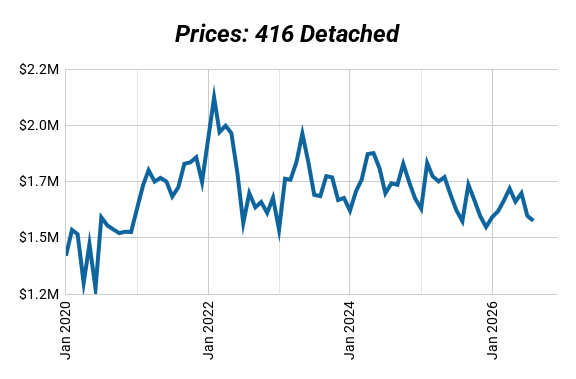
Go back to 2022. Fixed rates went from under 2% to 6% in under two years. That is a 3 times move. Toronto real estate prices fell roughly 25% as a result. It was a real shock, and it happened fast.
Then rates came back down to around 4%. Here is the part almost nobody talks about. Prices did not recover. They barely moved. Cheaper money should have brought buyers flooding back in. It did not.
That tells you something important. The real driver was never just the rate level. It was confidence. Once the hype around real estate always going up faded, buyers stopped rushing in every time money got cheaper. Prices stopped moving in lockstep with rates.
Why Prices Already Have a Floor
So will this new rate move push prices down further? Nobody knows for sure. But there is a strong case that prices already have more of a floor than most people think.
Prices already got tested at 6% interest rates, and they held around that 25% pullback without falling much further. Even if this round of tightening goes the full 100 basis points, fixed rates would land around 4.5%. That is still roughly halfway between the bottom and the peak of the last cycle. It is not new territory.
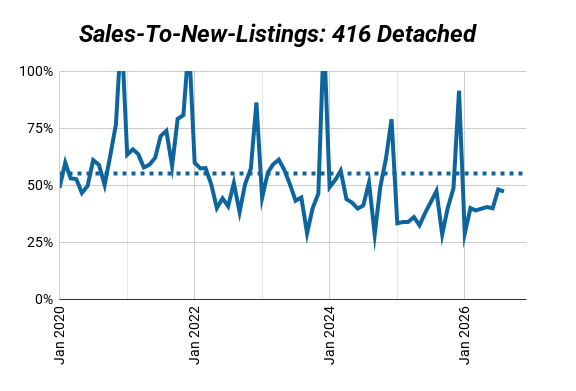
Meanwhile, the market has stayed fairly flat since the big drop in 2022. Sales and new listings have both been falling, but sales have been falling less, and sellers have been more realistic on price. That points to a market finding balance, not one about to break lower.
What About Rents?
If price has a floor, what actually absorbs the pressure from higher rates? The answer might be rent.
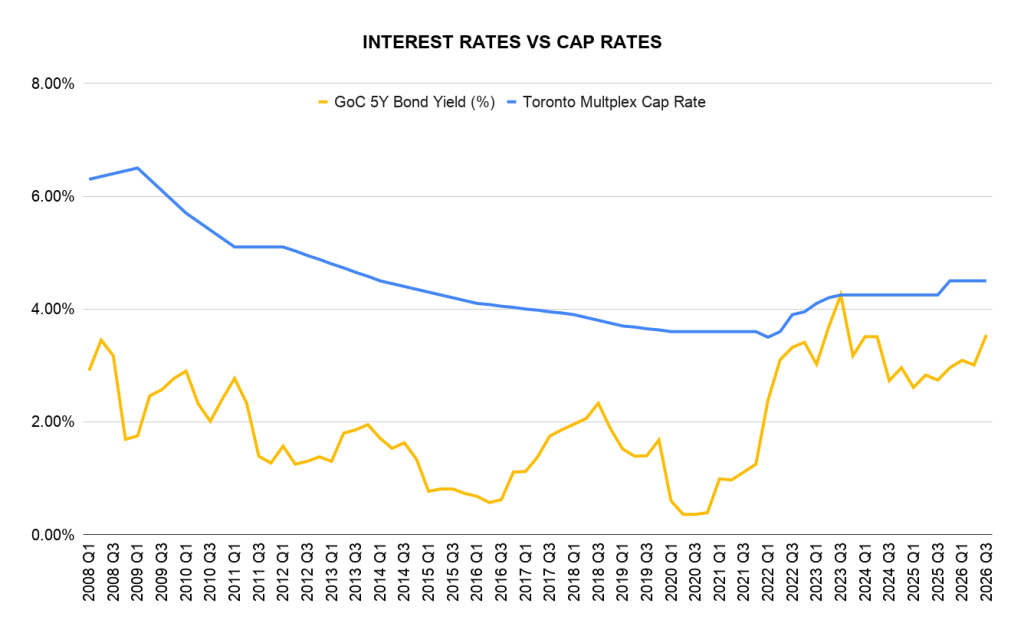
Real estate risk gets priced through cap rates, not appreciation. Cap rates and bond yields normally track each other closely. In 2022, yields spiked and cap rates followed, climbing to around 4.5%.
Here is the interesting part. Yields came back down after that, but cap rates never did. They have sat at 4.5% for about a year now. That tells us investors are simply demanding more buffer these days, since uncertainty has stayed elevated for a few years running.
Rents already pulled back, but only about half as much as prices did. That gap is part of what is driving some of the strongest cash flow numbers we have seen in years. If cap rates climb further from here, and price already has a proven floor, rent is the side with more room left to move. It could go either way, but that is the more likely path.
How to Run Your Numbers Right Now
Rates going up again does not mean another 2022. But it does mean it is time to build in more buffer, not less.
Run your numbers at the higher fixed mortgage rate, even if you are planning to go variable, and even if you do not think rates will climb that much. Be conservative on rent growth. The uncertainty out there is higher right now, so your projections should reflect that.
The good news is the starting point today is a lot healthier than it was in 2022. Turnkey multiplexes are currently running around $1,000 a month in positive cash flow on roughly a $1,000,000 purchase price. Compare that to early 2022, when turnkey multiplexes in the mid $1,000,000 range were negative cash flowing a few hundred dollars a month. This rate move is starting from a much safer place.
Talk to a Team That Knows the Numbers
Rates moving again does not automatically mean prices fall further. The data points to a market where prices have already found a floor, and rent is more likely to be the side that adjusts. Either way, the right move right now is running conservative numbers with real buffer built in, not sitting on the sidelines waiting for certainty that may not come.
Our brokerage specializes in Toronto multiplexes. We’ll help you find deals, crunch the numbers, and guide you through renovations and management. If you want full support in Toronto multiplex investing, our team can help you:- Find high-potential properties
- Crunch the numbers so you know exactly where you stand
- Coach you through renovations to maximize returns
- Lock in great tenants
- Provide full property management so your investment runs smoothly

What Toronto Real Estate Investment Is Right For You?
Check out our complete Toronto real estate investment guide for all the details and real-life examples. If you’re ready to dive in, just book a call with us!
This is for educational purposes only; it does not guarantee future performance or serve as financial or tax advice.
