Many investors in the Toronto real estate market are currently asking the same question. They want to know what happens to their investment if property prices drop further or stay flat for years. It is a fair concern given the current economic climate, but the answer lies in the data rather than speculation. A well-purchased Toronto multiplex can generate double-digit returns even without any price appreciation.
Most investors focus entirely on price growth to make money. However, a multiplex strategy relies on multiple income streams and debt reduction to build wealth. By looking at the actual numbers behind cash flow and mortgage paydown, it becomes clear that these properties offer a level of security that single-family homes or condos simply cannot match. You do not need a booming market to see a significant return on your capital.
The Power of Cash Flow and Equity Paydown
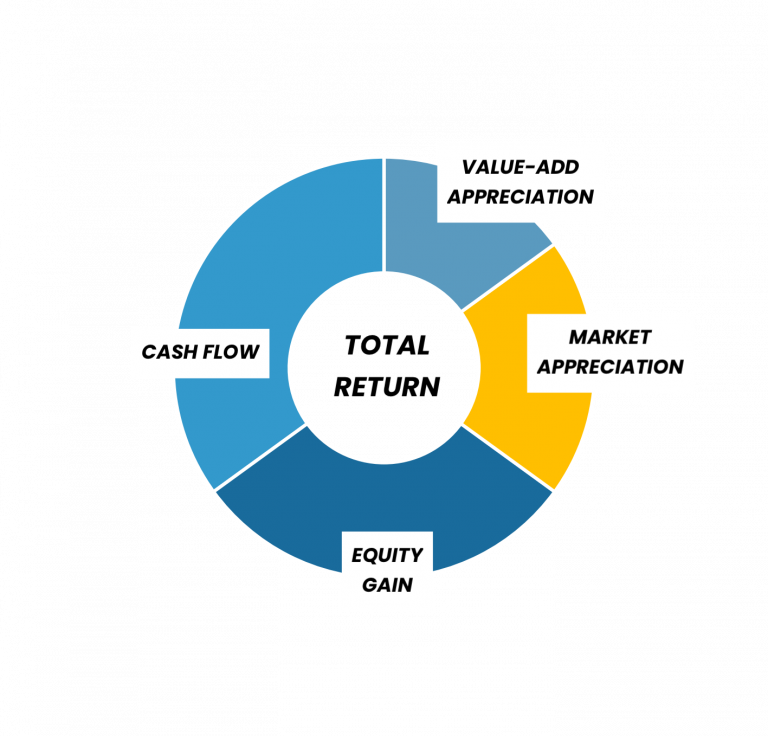
A Toronto multiplex has two main return drivers that function independently of the housing market cycle. The first driver is strong rental income that produces consistent cash flow. For example, a turnkey multiplex purchased for $1,000,000 can generate three separate rent streams totaling approximately $6,000 per month. After accounting for mortgage payments and all operating expenses, an investor can see $1,000 of positive cash flow every month.
The second driver is equity paydown. Every month your tenants pay your mortgage, they are directly increasing your net worth by reducing the principal balance. This typically adds another $1,000 per month to your wealth. When you combine the cash flow and the equity paydown, you are earning roughly $24,000 to $25,000 per year. On an initial investment of $250,000, this represents a 10% annual return before the property even goes up in value.
This 10% return is a reliable baseline because it is based on existing rental contracts and standard mortgage schedules. It outperforms many traditional investment options, including dividend stocks and the long-term average of the TSX. By using a total return calculator, investors can see how these two factors build a massive head start even during periods of market uncertainty.
Lessons From the 1989 Toronto Market Crash
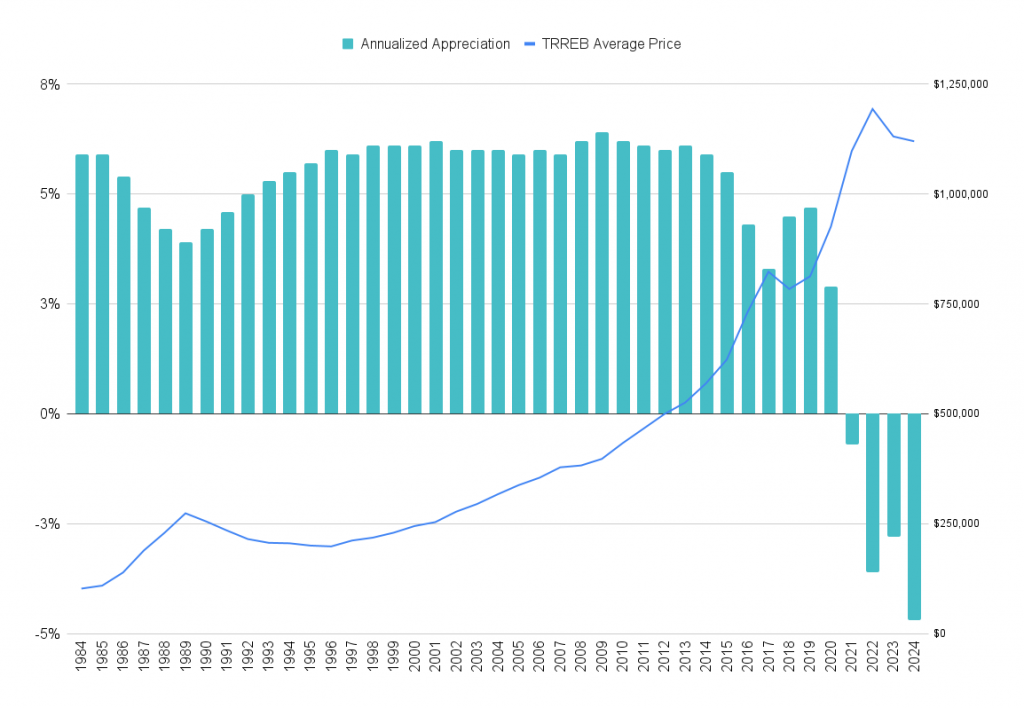
To understand the risks of a stagnant market, we must look at the 1989 Toronto real estate crash. During that time, mortgage rates reached double digits and prices dropped by 30%. It took 13 years for prices to return to their previous peaks. This is the exact scenario that many modern investors fear. However, history shows that even during this difficult period, landlords who held income-producing properties continued to build wealth.
While prices were flat or falling, tenants were still paying the rent every month. This income allowed landlords to keep their properties while the mortgage balance steadily decreased. An average property bought for $275,000 in 1989 is worth over $1,000,000 today. This represents a 290% total return over the long term. The ability to hold the asset through the downturn was entirely due to the rental income the property generated.
The fundamental difference between a condo and a multiplex is the stability of that income. When the market drops, your property value might fluctuate, but the demand for housing remains. In a multiplex, you have several units supporting the carrying costs. This makes it much easier to weather a storm compared to a single-unit investment that might be cash flow negative from day one.
Comparing Multiplex Returns to Appreciation
If we look at the data from 1989 to the present day, the annualized appreciation for Toronto real estate was approximately 4% per year. When you add this 4% growth to the 10% return generated by cash flow and equity paydown, the total return climbs toward 14% annually. Over a 20-year period, that appreciation can add another $1,000,000 to your total wealth. However, the most important takeaway is that the appreciation is just the bonus.
Many investors fail because they bank on a 10% or 15% price jump every year to make their numbers work. In the current market, it is vital to understand cap rates in real estate to ensure the property is profitable on its own merits. If a property does not produce income today, it is a speculative gamble rather than a sound investment. A multiplex provides a safety net because it is priced based on the income it produces.
When you focus on a property that yields a 10% return through rents alone, you remove the stress of checking market headlines every day. You are building a portfolio that is designed to survive stagnation and thrive during growth. Whether you are looking at Toronto sixplex and multiplex rules or smaller properties, the math remains the most important factor in your success.
Build Your Toronto Multiplex Strategy
A Toronto multiplex is one of the few assets that can provide a double-digit return regardless of which way the market swings. By focusing on cash flow and equity paydown, you protect your capital and build long-term wealth without relying on luck. Understanding these numbers is the first step toward becoming a successful investor in a complex city like Toronto. Working with a team that owns and manages these properties themselves ensures you are making decisions based on real-world data and experience.
Our brokerage specializes in Toronto multiplexes. We’ll help you find deals, crunch the numbers, and guide you through renovations and management. If you want full support in Toronto multiplex investing, our team can help you:- Find high-potential properties
- Crunch the numbers so you know exactly where you stand
- Coach you through renovations to maximize returns
- Lock in great tenants
- Provide full property management so your investment runs smoothly

What Toronto Real Estate Investment Is Right For You?
Check out our complete Toronto real estate investment guide for all the details and real-life examples. If you’re ready to dive in, just book a call with us!
This is for educational purposes only; it does not guarantee future performance or serve as financial or tax advice.
